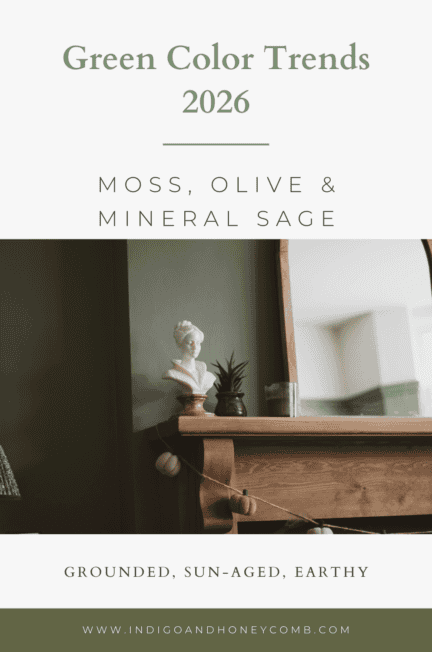
Among the strongest green color trends 2026 is embracing, one thing is becoming increasingly clear: earthy greens are no longer acting as accent colors. They are becoming the emotional foundation of interiors.
Across the Spring 2026 palette evolution, greens have shifted beautifully with the season itself, moving from the moody forest tones of early spring into softened sage and botanical haze by mid-spring before warming into mineral olive, pistachio, and oxidized green by late spring.
The result is a layered, atmospheric approach to green that feels grounded, sun-aged, and deeply connected to nature without becoming overly rustic or trend-driven.
Rather than bright emeralds or cool mint tones, the defining green color trends 2026 are softer, earthier, and more mineral-inspired, pairing effortlessly with clay, oat neutrals, walnut wood, terracotta, honeyed amber, brushed brass, and warm limestone palettes.
Early Spring Greens: Forest Depth & Deep Moss
The earliest green color trends 2026 introduced this spring leaned darker, moodier, and more atmospheric. Inspired by rain-soaked landscapes, woodland interiors, and mineral earth tones, early spring greens created spaces that felt cocooning and emotionally grounding after winter. Some of the defining early spring greens included:
- Moorland Reverie —
#0F5E4F
A deep woodland green with rich mineral depth - Deep Moss —
#4E5B3C
An earthy botanical green softened by muted undertones - Weathered Forest —
#3F4D3F
A shadowy organic green with atmospheric richness - Rain-Soaked Green —
#5F6F5A
A softened green-gray inspired by damp spring landscapes
These deeper greens worked beautifully alongside charcoal plum, mineral blue, smoked walnut, and aged linen, helping establish the moody softness that defined early spring interiors. Rather than feeling bright or heavily saturated, these green color trends 2026 embraced depth, texture, and subtle tonal layering.
Mid-Spring Greens: The Rise of Softened Sage
As spring progressed, the strongest green color trends 2026 began softening. Mid-spring introduced more airy botanical tones inspired by watercolor florals, garden landscapes, coastal light, and softened natural textures. Greens became lighter, dustier, and more atmospheric while still maintaining their earthy undertones.
One of the defining shades of mid-spring was:
- Airy Sage —
#B7C4B2
A light botanical green softened with gray undertones
Other softened green pairings included:
- muted eucalyptus
- pale olive-gray
- misted botanical greens
- faded herbal tones
These softer greens paired naturally with:
- dusty rose
- muted lavender
- faded sky blue
- watercolor peach
- cloud whites
- warm oat neutrals
The result was a calmer, lighter interpretation of green that helped bridge the transition from early spring moodiness into late spring warmth.
Late Spring Greens: Mineral Olive, Pistachio & Oxidized Green
By late spring, green color trends 2026 begin warming significantly. The palette shifts away from cool botanical softness and toward more sun-aged, Mediterranean-inspired greens with mineral and olive undertones. These greens feel grounded, weathered, and softly nostalgic; perfectly aligned with the Honeyed Patina aesthetic shaping late spring interiors. Some of the defining late spring greens include:
- Olive Grove —
#6E7251
A grounded olive green inspired by Mediterranean landscapes - Soft Pistachio —
#A9B48B
A muted botanical green with fresh late spring softness - Smoked Olive —
#62624D
A darker olive tone softened with earthy depth - Oxidized Copper Green —
#7C846C
A patina-inspired mineral green with aged character
These greens pair beautifully with:
- butter yellow
- honeyed amber
- terracotta clay
- parchment white
- brushed brass
- walnut wood
- warm limestone
Together, they create interiors that feel layered, tactile, and naturally evolved over time.
Why Green Color Trends 2026 Feel More Earthy Than Previous Years
One of the biggest shifts happening within green color trends 2026 is the movement away from cooler, cleaner greens and toward more muted mineral-inspired variations. For years, interior greens leaned:
- cool sage
- crisp eucalyptus
- mint
- emerald
- highly saturated botanical tones
But the newest greens feel:
- dustier
- warmer
- softer
- olive-based
- earthier
- weathered by light
This creates palettes that feel more timeless and emotionally grounding rather than overly trend-driven.
The strongest green interiors now feel connected to:
- moss-covered stone
- weathered garden walls
- olive groves
- aged copper patina
- handmade ceramics
- natural linen
- Mediterranean landscapes
This softer evolution explains why green continues dominating interior trend forecasting for 2026.
Why Green Continues Dominating Interior Color Trends in 2026
Green remains one of the most versatile colors within interior color trends because it balances warmth, calmness, and connection to nature all at once. But the newest green color trends 2026 are especially compelling because they evolve naturally alongside the changing seasons. Early spring greens felt moody and cocooning. Mid-spring greens softened into airy botanical palettes. Late spring greens now feel mineral-rich, olive-toned, and sun-aged.
That progression creates continuity across the entire spring series while reflecting a broader movement happening within interiors overall. A desire for spaces that feel layered, grounded, tactile, and emotionally comforting. As 2026 continues unfolding, moss, olive, mineral sage, and oxidized greens are proving that the most timeless palettes are often the ones inspired directly by nature itself.