For years, maximalism was associated with bold contrast, saturated color, eclectic layering, and statement-making interiors filled with visual intensity. But late spring maximalism in 2026 is evolving into something far softer and more atmospheric.
Instead of loud dopamine decor and high-energy palettes, the newest approach to maximalism feels tonal, romantic, earthy, and deeply collected. Rooms are embracing layered neutrals, muted florals, antique-inspired finishes, honeyed browns, olive greens, clay textures, and softly drenched palettes that create depth without visual chaos.
The result is a version of maximalism that feels quieter, warmer, and more emotionally grounded, perfectly aligned with the evolving interior color trends defining late spring 2026.
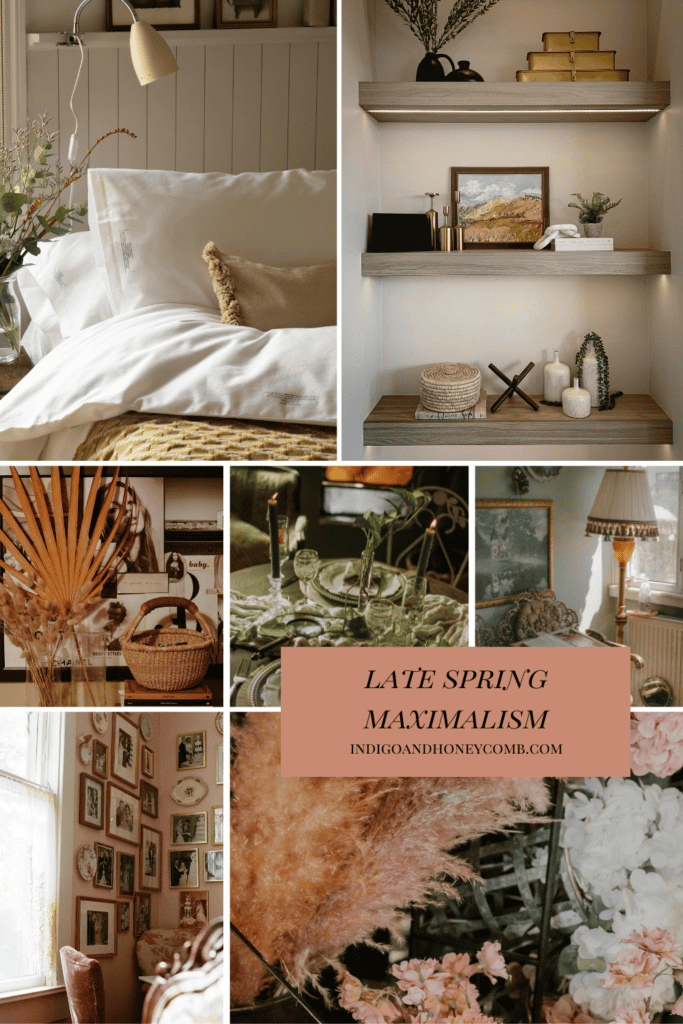
How Late Spring Maximalism Differs From Earlier Maximalist Trends
One of the biggest shifts happening within late spring maximalism is the move away from sharp contrast and toward tonal layering. Earlier maximalist trends often focused on:
- bright saturated color
- bold pattern mixing
- high-contrast palettes
- statement furniture
- playful visual overload
But late spring maximalism is softer by design. Instead of relying on contrast, rooms are becoming layered through:
- tonal drenching
- texture variation
- aged finishes
- muted saturation
- collected materials
- warm atmospheric palettes
The effect feels immersive rather than overwhelming.This shift reflects a broader movement happening across interior design, where homeowners are prioritizing emotional comfort, warmth, and lived-in beauty over highly performative spaces.
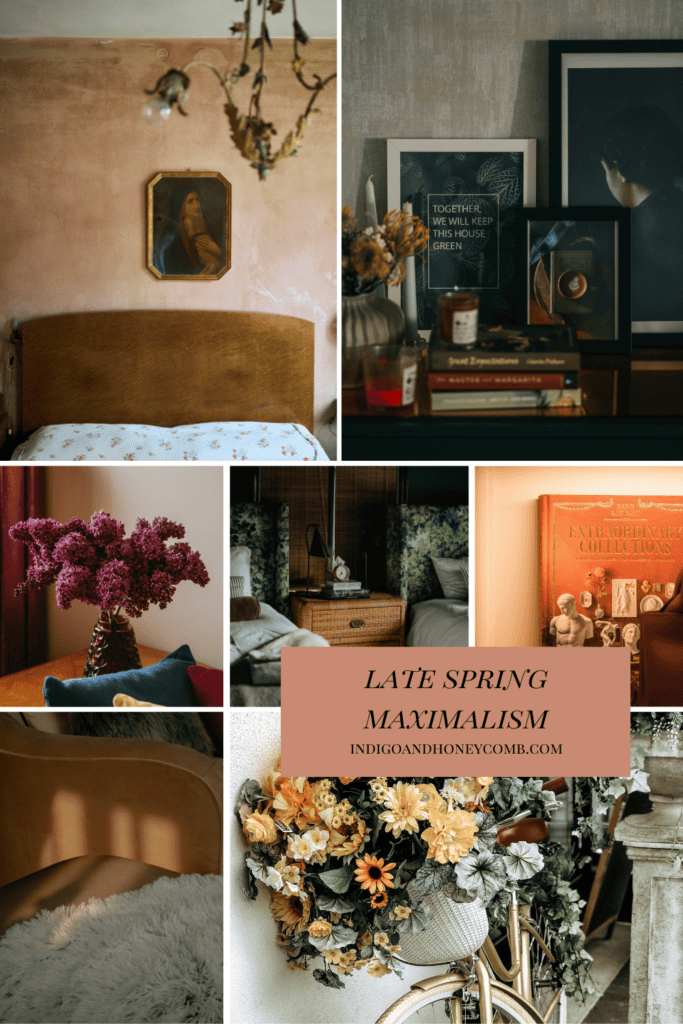
Tonal Drenching Is Defining Late Spring Maximalism
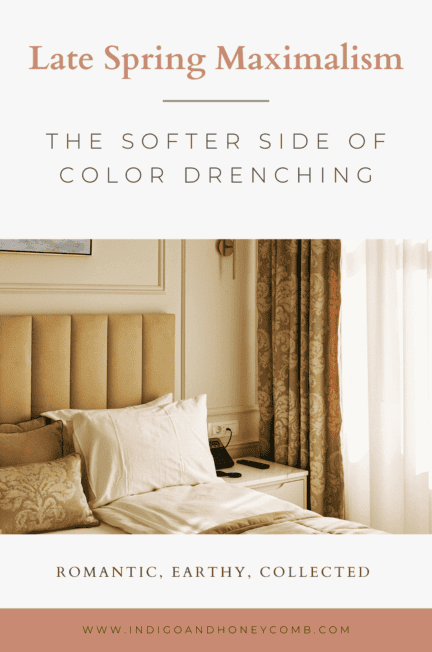
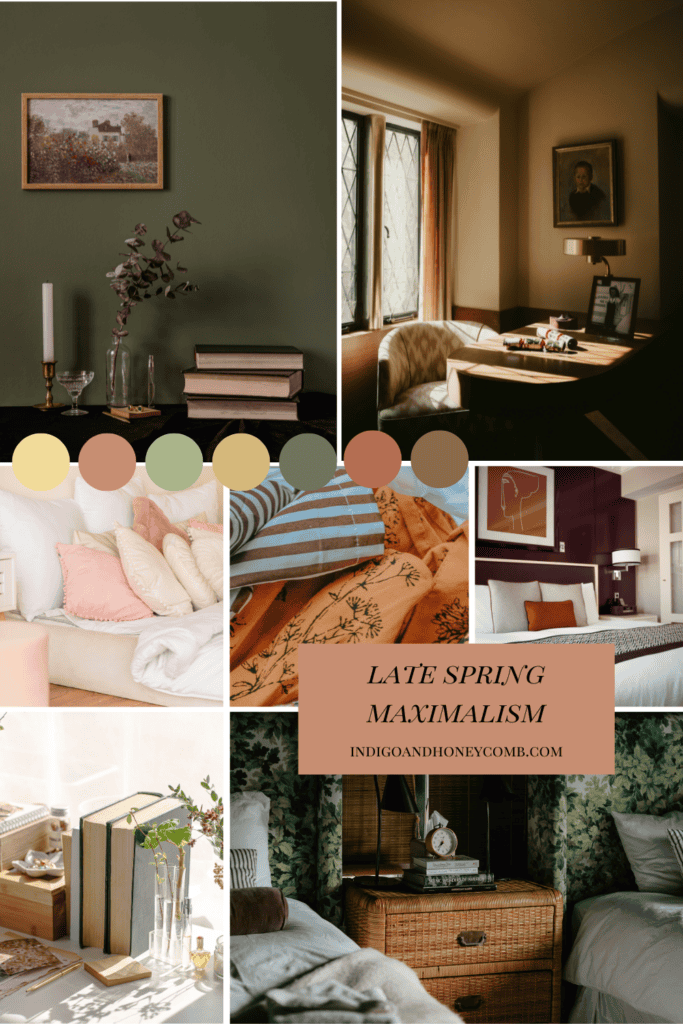
Color drenching remains one of the strongest interior trends of 2026, but late spring maximalism is giving the concept a softer interpretation. Rather than drenching rooms in one bold saturated color, designers are layering tonal variations within the same earthy family to create warmth and depth.
Some of the strongest late spring maximalism palettes include:
- layered honey-browns
- clay-on-clay tonal palettes
- olive and ochre pairings
- parchment and oat neutrals
- dusty botanical greens
- muted terracotta
- faded marigold
- smoked walnut
These tonal combinations allow rooms to feel richly layered without becoming visually loud. Walls, upholstery, textiles, ceramics, and painted millwork are often staying within the same tonal range, creating spaces that feel cocooning, immersive, and softly architectural.
Why Late Spring Maximalism Feels More Romantic Than Loud
One reason this trend feels so different from earlier maximalist movements is because the inspiration itself has shifted. Instead of playful pop culture references or highly graphic interiors, the newest spaces are pulling inspiration from:
- antique European homes
- weathered plaster walls
- vintage textiles
- botanical paintings
- faded floral tapestries
- Mediterranean villas
- collected heirloom objects
- aged brass and patina finishes
Muted florals are also returning, but in softer and more atmospheric ways. Rather than bright cottagecore florals, late spring maximalism is embracing:
- dusty rose botanicals
- faded olive greens
- soft ochre florals
- parchment backgrounds
- smoky lavender accents
- antique-inspired prints
This creates interiors that feel romantic and layered rather than overtly decorative.
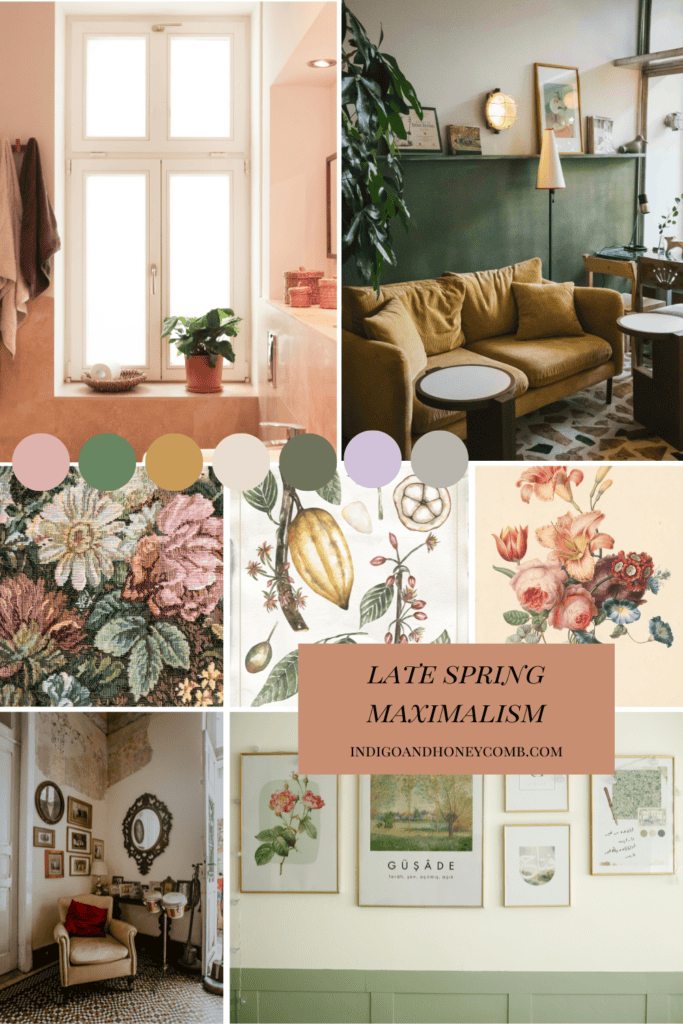
Honeyed Patina and Earthy Color Stories Are Driving Late Spring Maximalism
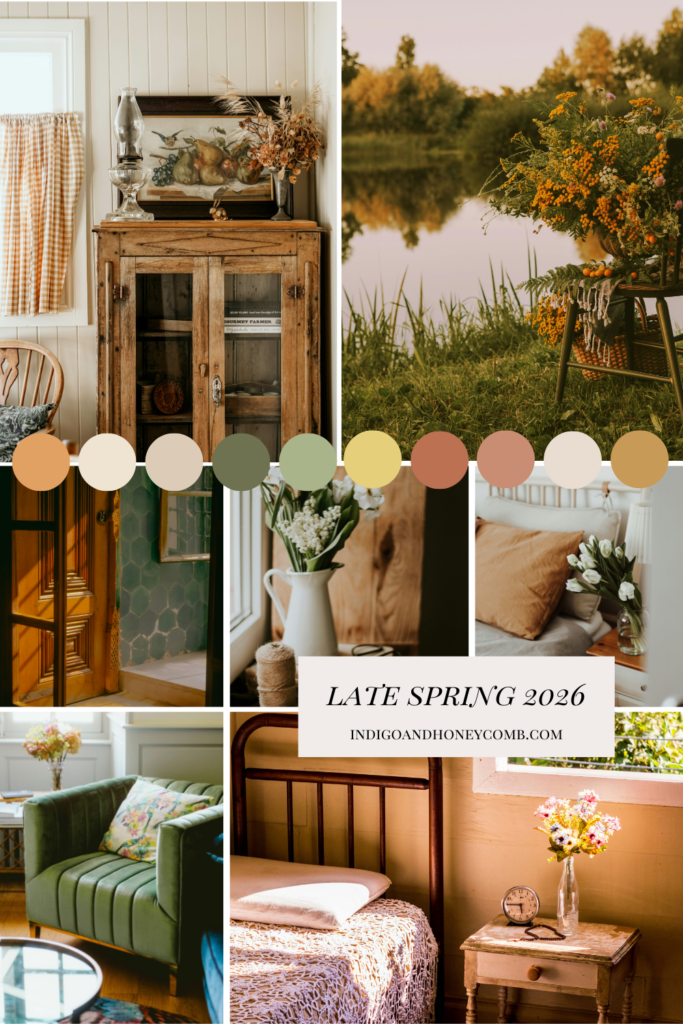
Much of this newer trend ties directly into the broader color evolution happening throughout Spring 2026. Early spring introduced moodier mineral tones and cocooning palettes. Mid-spring softened into watercolor florals and hazy pastels. Now, late spring maximalism is warming those palettes through:
- honeyed amber
- oat neutrals
- terracotta clay
- olive greens
- butter yellow
- oxidized brass
- walnut wood
- sun-aged linen
This progression mirrors the seasonal shift from cool atmospheric palettes into warmer, more grounded interiors. Honeyed Patina, Indigo & Honeycomb’s May Color of the Month, naturally fits within this movement because it balances warmth, age, texture, and tonal depth all at once.
The Softer Side of Maximalism Is About Collection, Not Clutter
One of the misconceptions about maximalism is that it requires visual excess. But this newer maximalism trend works differently. The newest interiors feel collected rather than crowded.
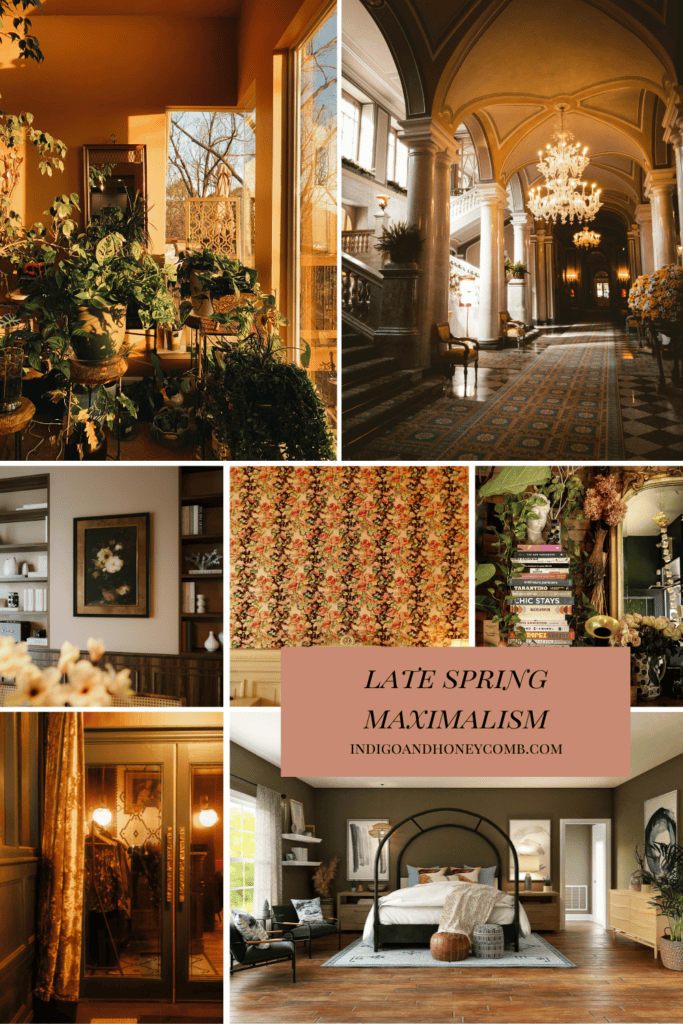
Rooms are becoming more layered, more personal, and more emotionally expressive through subtle tonal variation instead of dramatic contrast. Texture plays just as important a role as color, with linen, boucle, plaster, aged wood, brushed brass, handmade ceramics, and woven materials helping spaces feel tactile and grounded. The overall aesthetic feels:
- warm
- softly nostalgic
- artisan-inspired
- sun-aged
- tonal
- romantic
- lived-in
Rather than relying on trend-driven statement pieces, late spring maximalism creates richness through restraint and repetition.
How Seasonal Color Saturation Is Evolving in 2026
One of the most interesting aspects of late spring maximalism is how it reflects the broader seasonal evolution happening across interior color trends in 2026. Earlier spring palettes embraced moodiness and atmospheric depth. Mid-spring softened into airy watercolor tones. But by late spring, saturation itself becomes quieter and more sun-washed.
Colors are becoming:
- dustier
- earthier
- warmer
- more muted
- softly faded
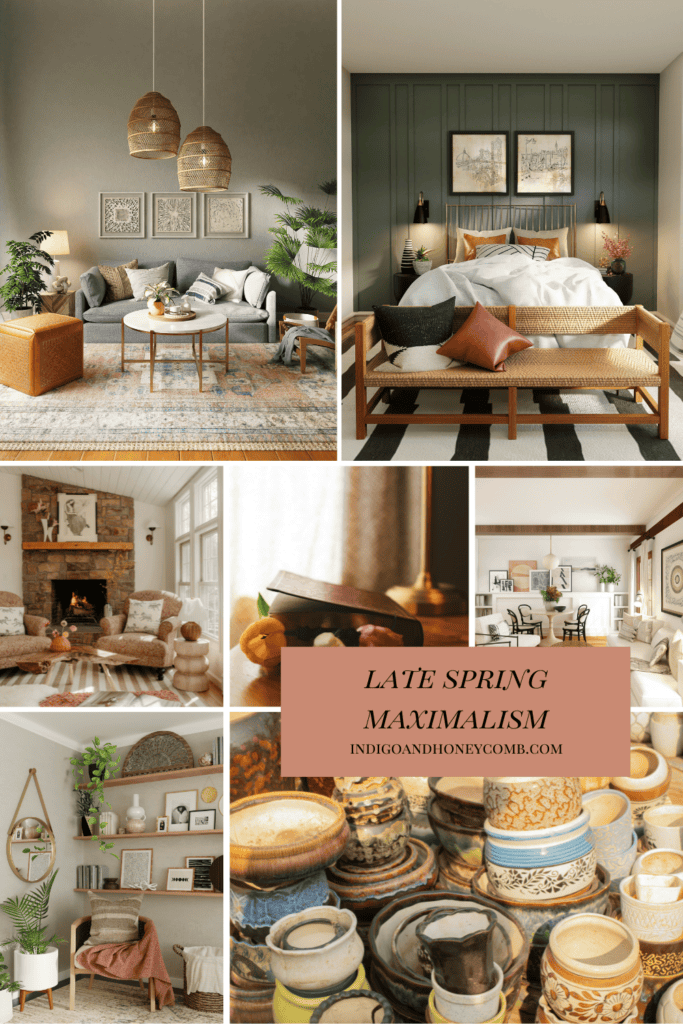
Instead of sharp pigment and bright contrast, the strongest late spring palettes feel softened by light, texture, and age. This is exactly why tonal drenching and layered maximalism resonate so strongly right now. The aesthetic allows interiors to feel immersive and expressive without losing warmth or calmness.
Why Late Spring Maximalism Feels So Relevant Right Now
The growing popularity of this trend reflects a larger desire for interiors that feel emotionally grounding and deeply personal. Homes are shifting away from sterile minimalism and hyper-trendy aesthetics in favor of spaces that feel:
- layered over time
- connected to nature
- rich in texture
- visually comforting
- imperfect in beautiful ways
And color is leading that transformation. Late spring maximalism proves that maximalist interiors no longer need to feel loud to feel expressive. In 2026, the most compelling rooms are the ones layered with warmth, patina, texture, and softly evolving color stories that feel collected slowly over time.