
Botanical Color Palettes for Mid-Spring Allure
If early and mid-spring begin in light, they quickly return to earth. After the soft, atmospheric blues of the season’s first shift, color begins to gather again. This time not in the sky, but in the landscape. Greens deepen. Florals emerge. Texture replaces translucency. This is where botanical color palettes evolve.
In mid-spring 2026, the garden is no longer something to be carefully arranged or color-coordinated. It is something to be observed: slightly wild, loosely layered, and full of natural variation. The new botanical isn’t styled. It’s allowed to happen.
The Trend Shift: From Curated to Wild
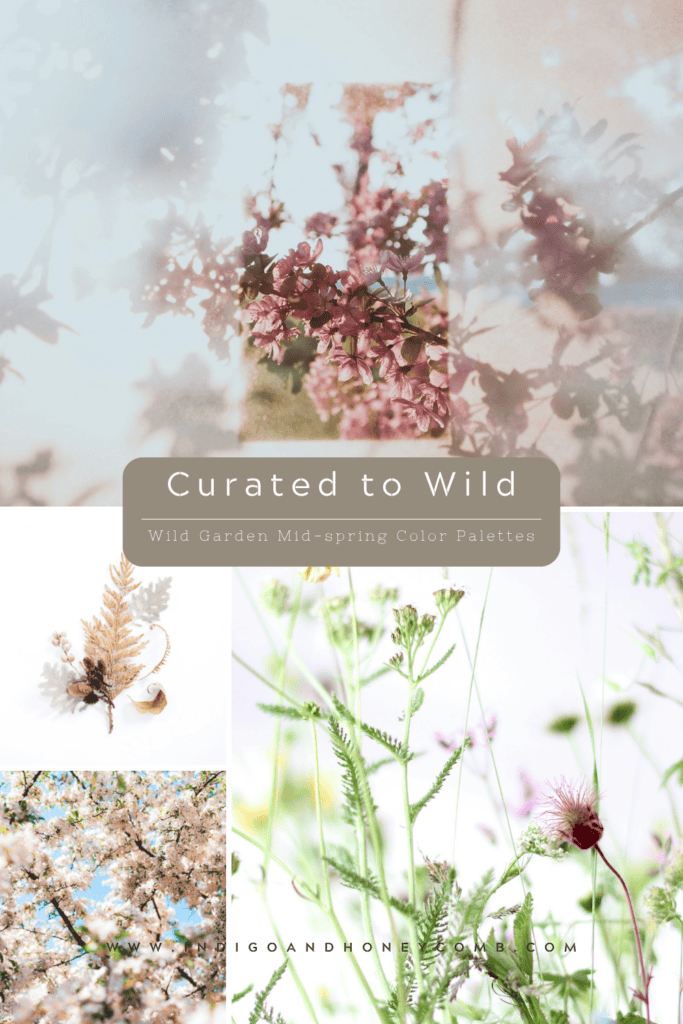
For years, botanical palettes leaned polished. Eucalyptus stems in perfect vases, restrained greens paired with soft neutrals, nature distilled into something minimal. Now, that restraint loosens. The emerging direction pulls from:
- overgrown English gardens where florals tangle and overlap
- California super blooms, where color appears in unexpected combinations
- pollinator landscapes designed for movement, not symmetry
This shift introduces a more expressive kind of palette—one that feels layered, imperfect, and quietly alive. Rather than relying on a single dominant hue, these palettes unfold through tonal variation in greens, unexpected floral notes, and grounding earth tones like soil, bark, and clay. The effect is less composed, more intuitive: color that feels gathered over time, shaped by nature rather than arranged by design.
5 Wild Garden Botanical Color Palettes for Mid-Spring
Wildflower Meadow
Mood: spontaneous, sunlit, joyful
Inspiration: open fields in bloom, color scattered by wind
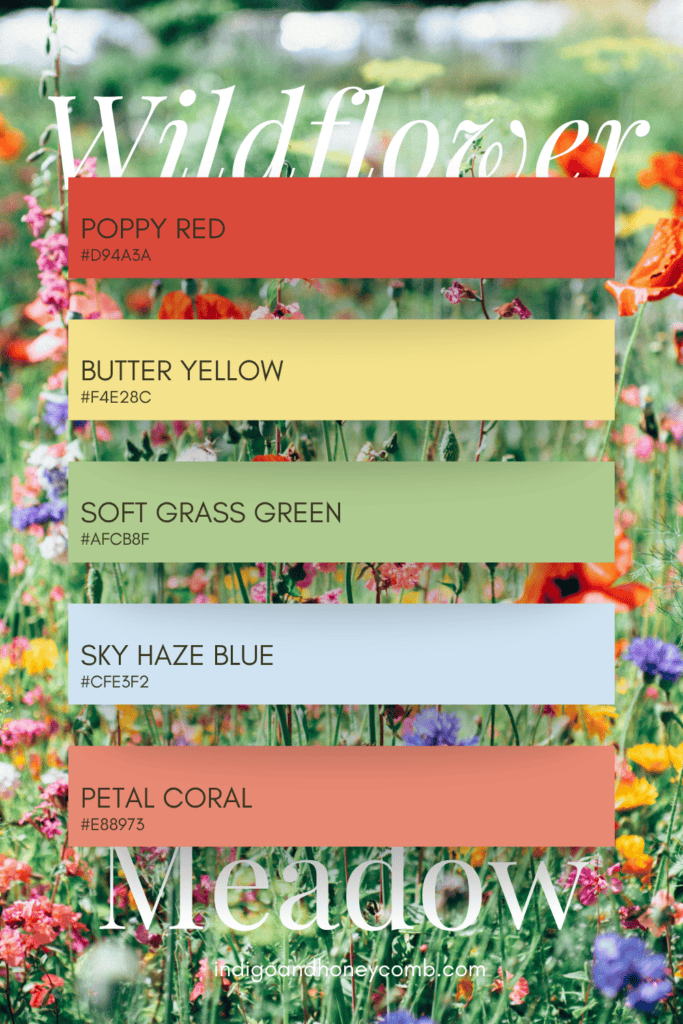
This palette captures the energy of mid-spring at its peak, where color appears freely and without hierarchy. Bright florals are softened by airy blues and natural greens, creating a balance between vibrancy and ease.
Eucalyptus & Clay
Mood: grounded, organic, quietly refined
Inspiration: dried stems, sun-warmed earth, natural materials
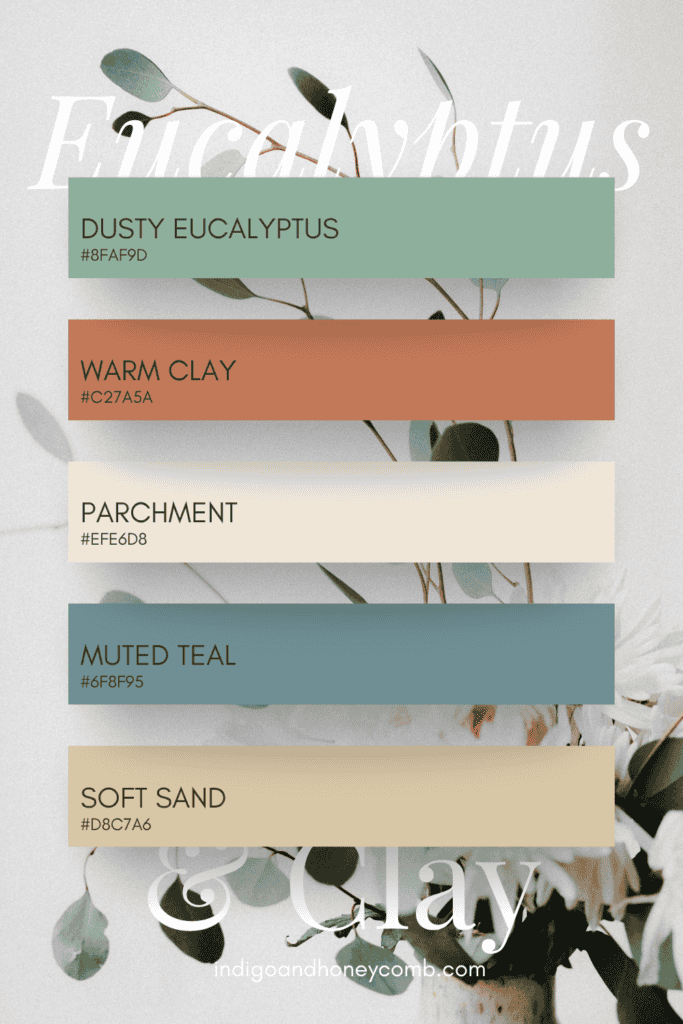
Here, the palette leans into restraint, but not minimalism. The variation comes through texture and undertone, blending cool greens with the warmth of clay and parchment for a lived-in, tactile feel.
Garden Shadow
Mood: moody, layered, introspective
Inspiration: shaded corners of a garden, where color deepens and softens
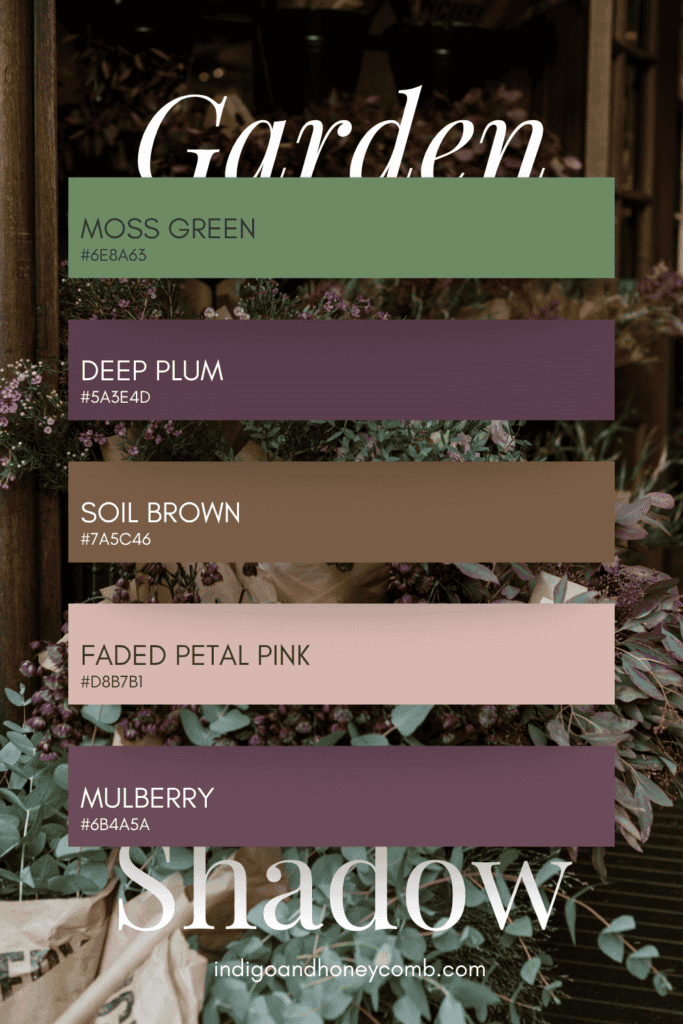
This palette bridges early spring moodiness with mid-spring growth. Darker tones anchor the palette, while faded florals add softness, creating a sense of depth and quiet complexity.
Pollinator Path
Mood: active, natural, in motion
Inspiration: bees, butterflies, and the pathways they follow
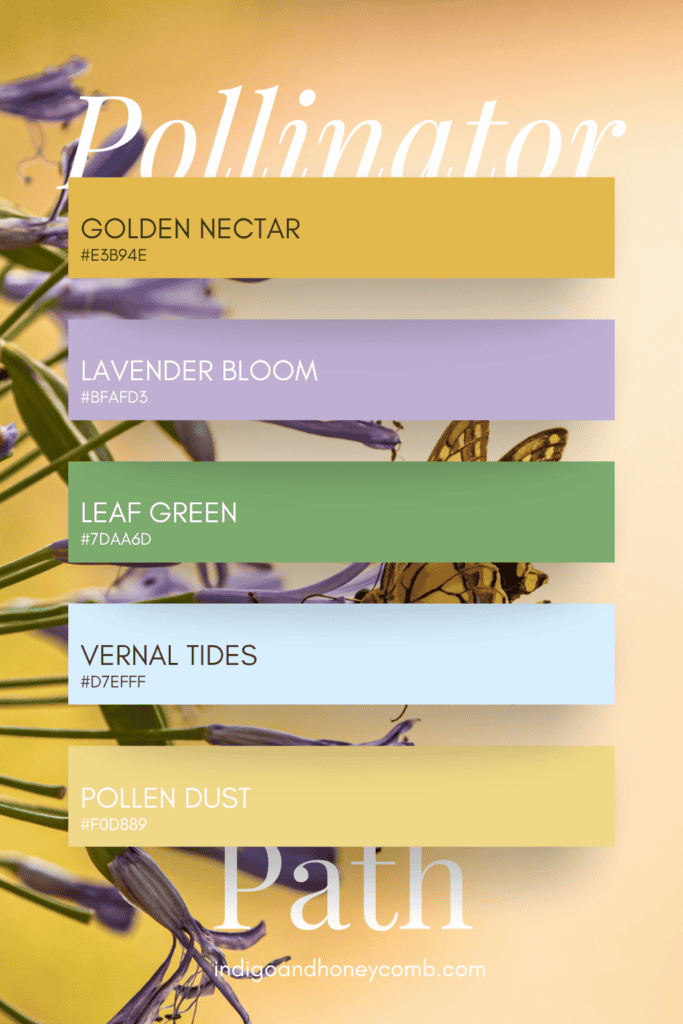
This palette reflects movement. Color designed not just to be seen, but to interact. It brings together florals and greens in a way that feels dynamic yet cohesive.
Overgrown Garden
Mood: nostalgic, textural, quietly abundant
Inspiration: untended gardens, where layers build naturally over time
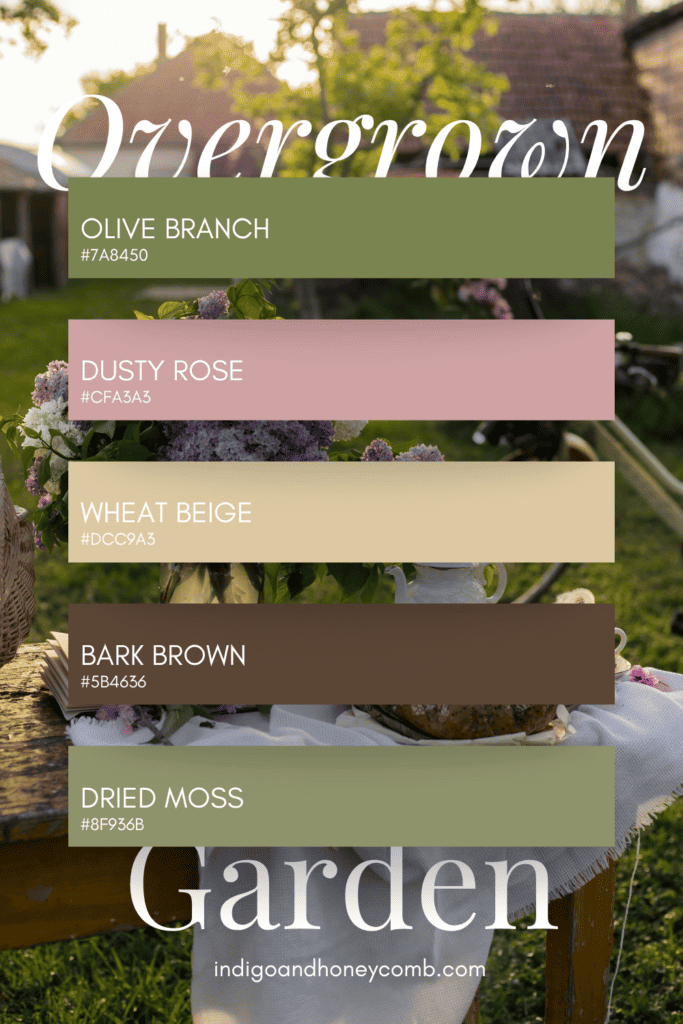
This palette is less about bloom and more about accumulation. Each color feels softened, slightly aged, and deeply connected to the natural world.
Design Insight
What defines the new botanical is not just the colors themselves, but how they’re used. Instead of isolating hues, this approach embraces layering and variation:
- combining multiple greens rather than choosing one
- mixing florals with earth tones for balance
- allowing contrast to feel organic, not forced
At the same time, it reflects a broader shift in interiors—away from perfection and toward presence. As a result, spaces inspired by these palettes feel collected rather than curated. Materials begin to reveal their natural texture, while colors appear slightly irregular. Together, these elements create an environment where nothing feels overly refined, but instead thoughtfully lived-in and real.
Final Thoughts
If Vernal Tides introduced the lightness of mid-spring, the new botanical brings it back to earth. Here, color is no longer distant or atmospheric. It’s tactile, layered, and alive. And as the season continues, this natural abundance begins to soften once again, evolving into something more romantic, more expressive, and more personal.

Leave a Reply